Cincinnati's healthcare workforce needs more nurses. Chamberlain University's new Sycamore Township campus is entering that market with a credential meant to measure something prospective students and employers care about: whether a college expands access and whether its former students go on to earn more than comparable workers in the communities it serves.
Chamberlain University-Ohio is one of 478 institutions nationwide to earn the Opportunity College and University designation in the 2025 Student Access and Earnings Classification, based on data collected at the Columbus campus.
The Carnegie Foundation for the Advancement of Teaching and the American Council on Education released the classification in April 2025. The two organizations began designing the measure in 2022 as a companion to the long-running Carnegie Classifications, which sort colleges by type rather than rank them.
The classification applies two tests:
- Access. It compares a school's share of undergraduates who receive Pell Grants or come from underrepresented racial and ethnic groups with the makeup of the places its students come from.
- Earnings. It compares the median earnings of former students eight years after they first enrolled with the earnings of adults ages 22 to 40 in those same places who have at least a high school diploma. "Former students" includes those who didn't finish. For institutions evaluated on a multistate basis, Carnegie uses an enrollment-weighted comparison built largely from the top three states students come from, along with national data.
To earn the designation, a school must at least match its community on access and clear an earnings threshold that varies by institutional category. Chamberlain is classified as a Special Focus: Nursing institution, for which Carnegie set the higher-earnings threshold at 25% above the comparison group.
The designation reflects Chamberlain's record as an institution, built on federal data from years before the Cincinnati campus existed. The new campus won't produce earnings data of its own for years.
The campus sits at 5905 E. Galbraith Road in the Kenwood Collection development. It is Chamberlain's 25th campus nationwide and its second in Ohio. Classes for the first cohort began Aug. 31.
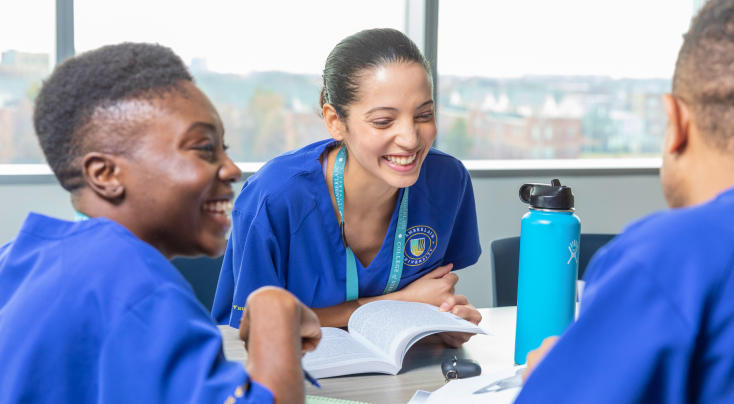
The direct-entry Bachelor of Science in Nursing program can be completed in as few as three years, putting the earliest graduates on track for 2029. No prerequisite courses are required.
Priya Shastri, the campus's executive director, told Local 12 that the program was designed for adults balancing school with work and family obligations.
"There will also be options for people to come to school on the weekends and in the evenings and so it is catered towards working parents, career changers and adult learners," she said.
Shastri also framed the campus as an addition to Cincinnati's existing nursing programs rather than a rival.
"We're joining a city with strong nursing programs and health systems already doing this work, and our students will train alongside them," she said in the university's announcement.
The Carnegie measure tracks what former students earn, not how employers view the degree. Covista, Chamberlain's publicly traded parent company, has examined that question in its own research.
In the Covista Care Capacity Monitor, a 2026 survey the company commissioned and Gallup fielded, about 85% of healthcare executives who expressed an opinion said it makes no difference in hiring whether a degree comes from a for-profit or nonprofit school. The report also says the Cincinnati metro posted nearly 50,000 healthcare job openings last year.
To mark the campus opening, Hamilton County Commissioner Denise Driehaus proclaimed Aug. 20 "Chamberlain University Day."
Chamberlain also awarded Cincinnati resident Damenika Jacobs a full-ride nursing scholarship and announced applications for three additional full-ride scholarships. Applicants may come from anywhere in the United States if they plan to attend the Cincinnati campus.
Chamberlain and Covista also committed $150,000 over three years to The Health Collaborative for healthcare career programs aimed at local middle and high school students.