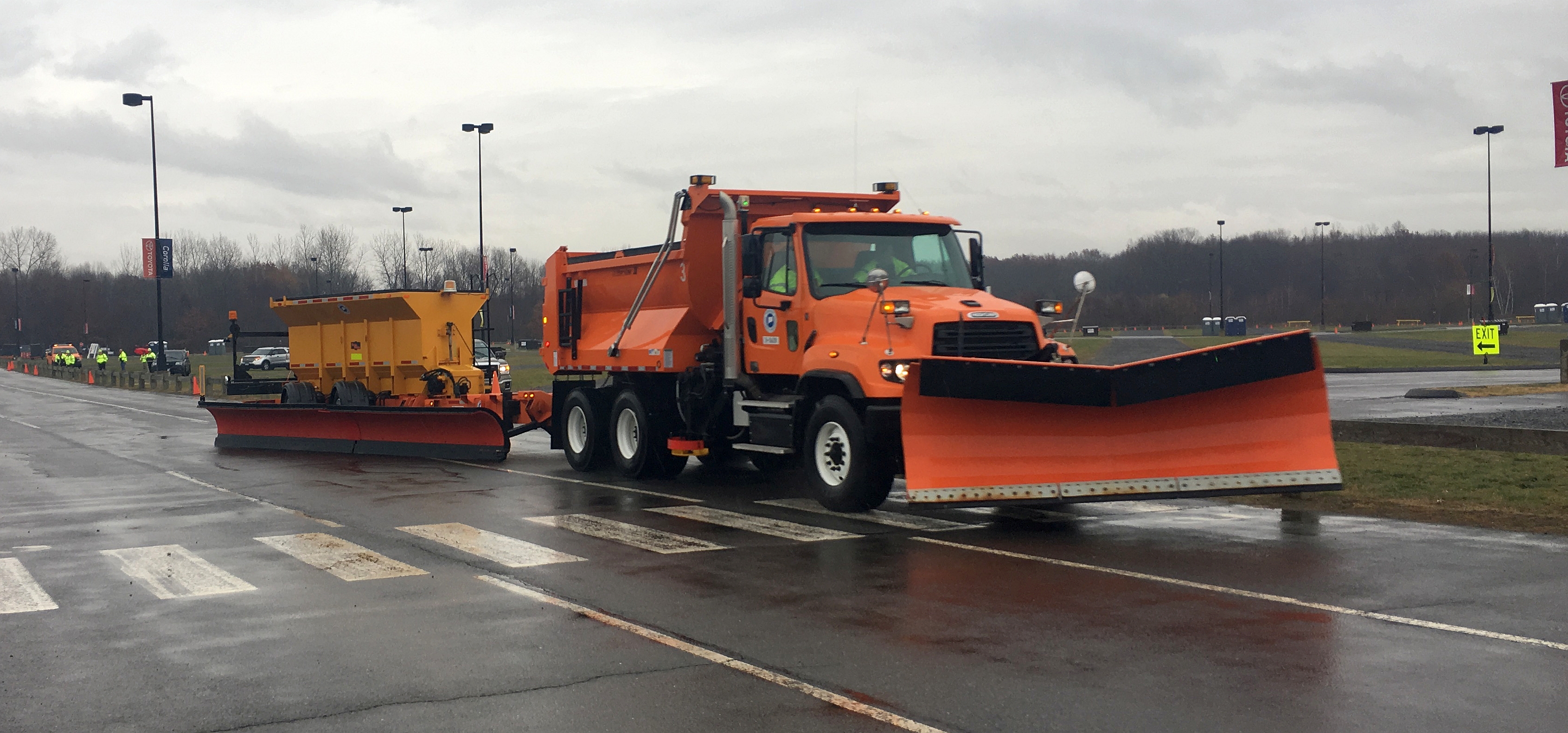
Loveland will use a $75,000 state grant to buy an automatic brine-making system and application equipment, giving the city's Public Works Department a new tool to pre-treat roads before winter storms hit.
The Ohio EPA awarded the funds through its H2Ohio Rivers Chloride Reduction Grant Program, the city announced Monday, Aug. 3. Loveland received the maximum individual award in the program's fourth funding round, which distributed more than $975,000 across 15 projects statewide.
Mayor Kathy Bailey credited City Engineer Kelsey Richards for securing the grant.
"Investing in a new brine-making system will allow our Public Works Department to proactively treat roads before winter storms arrive, improving driving conditions and making our streets safer for residents, visitors, emergency responders, school buses, and everyone who travels throughout our community," Bailey said in the announcement.
How brine pre-treatment works
The system applies a salt solution to pavement before ice and snow arrive, preventing ice from bonding to the road surface. That means plows and salt trucks can do their jobs with less material.
The efficiency gains are significant. A February 2026 study cited by WXPR found that $1,000 worth of road salt covers about 70 lane miles when spread as traditional rock salt but more than 175 lane miles when mixed with brine. Less salt on the roads also means less chloride washing into local waterways.
Part of a statewide push
The H2Ohio Rivers Chloride Reduction Grant Program is an expansion of Gov. Mike DeWine's H2Ohio initiative, launched in 2019. DeWine said the program targets "practical, common-sense solutions" that protect waterways while easing costs for local taxpayers.
Other fourth-round recipients include Jefferson County, which received $60,000 for articulating snow plow blades on 15 trucks, according to the County Engineers Association of Ohio.