Pedestrians and cyclists account for less than 2% of crashes in the greater Cincinnati region but nearly 12% of fatal and serious-injury crashes, according to a new study released Aug. 12 by the Ohio-Kentucky-Indiana Regional Council of Governments. The findings arrive as Loveland students returned to classrooms Aug. 13-14 and Milford students start classes Aug. 17, with some walking or biking along busy arterial roads to get there.
The ten-year analysis, covering 2015 through 2024 across OKI's eight-county region including Hamilton and Clermont counties, found that nearly 20% of crashes involving a pedestrian or cyclist resulted in a fatal or serious injury. For all motor-vehicle crashes, that figure was about 2%.
"People walking and biking are involved in a small number of crashes, but the consequences are far more severe for them," said Elizabeth Niese, OKI senior data analyst and the study's author, in the Clermont Sun's report. "Our analysis shows that speed, lighting and roadway design strongly influence whether someone survives a crash."
Speed stood out as the strongest factor.
A pedestrian struck at 25 mph faces roughly a one-in-five chance of fatal or serious injury. At 35 mph, that risk jumps to 50%.
Arterial roads, which make up only about 10% of the region's roadway miles, accounted for roughly half of all fatal and serious pedestrian and bicycle crashes. Local residential streets, by contrast, make up more than 70% of road miles but see far fewer severe incidents.
Streetlighting also mattered. On roads with fewer than 16 streetlights per mile, 27% of nighttime pedestrian and cyclist crashes resulted in fatal or serious injury. Where at least 53 streetlights per mile were present, that rate dropped to 15%.
Local timing and context
In Milford's school district, bus service is no longer provided to high school students and K-8 students must live at least two miles from their school to qualify for a bus, a policy that took effect during the 2025-26 school year. The district's February 2026 Safe Routes to School plan identifies key student walking and biking corridors along arterial and collector roads including SR 131, Wolfpen-Pleasant Hill Road, Branch Hill-Guinea Pike, Loveland-Miamiville Road and S. Milford Road.
At Boyd E. Smith Elementary School in Milford, 89.4% of students live within two miles of the school, yet only about 2% walk or bike, according to the plan.
Most crashes in the OKI study occurred between 3 p.m. and 8 p.m., when traffic volumes peak and visibility drops at dusk. Pedestrians also saw elevated crash rates during the morning commute, times that overlap with school arrival and dismissal.
What's in the pipeline locally
The City of Loveland has a $4.6-million OKI grant to improve the Loveland-Madeira Road Corridor with a shared-use pathway and street lighting, with construction anticipated in 2027. A separate $283,191 ODOT safety grant funded sidewalk installation along Loveland-Madeira Road, with construction that started in April 2026. The city also received a $2-million ODOT grant and a $761,000 OKI grant to build sidewalks connecting more than 400 homes in the Warren County portion of the city to downtown, with construction expected to begin in spring 2028.
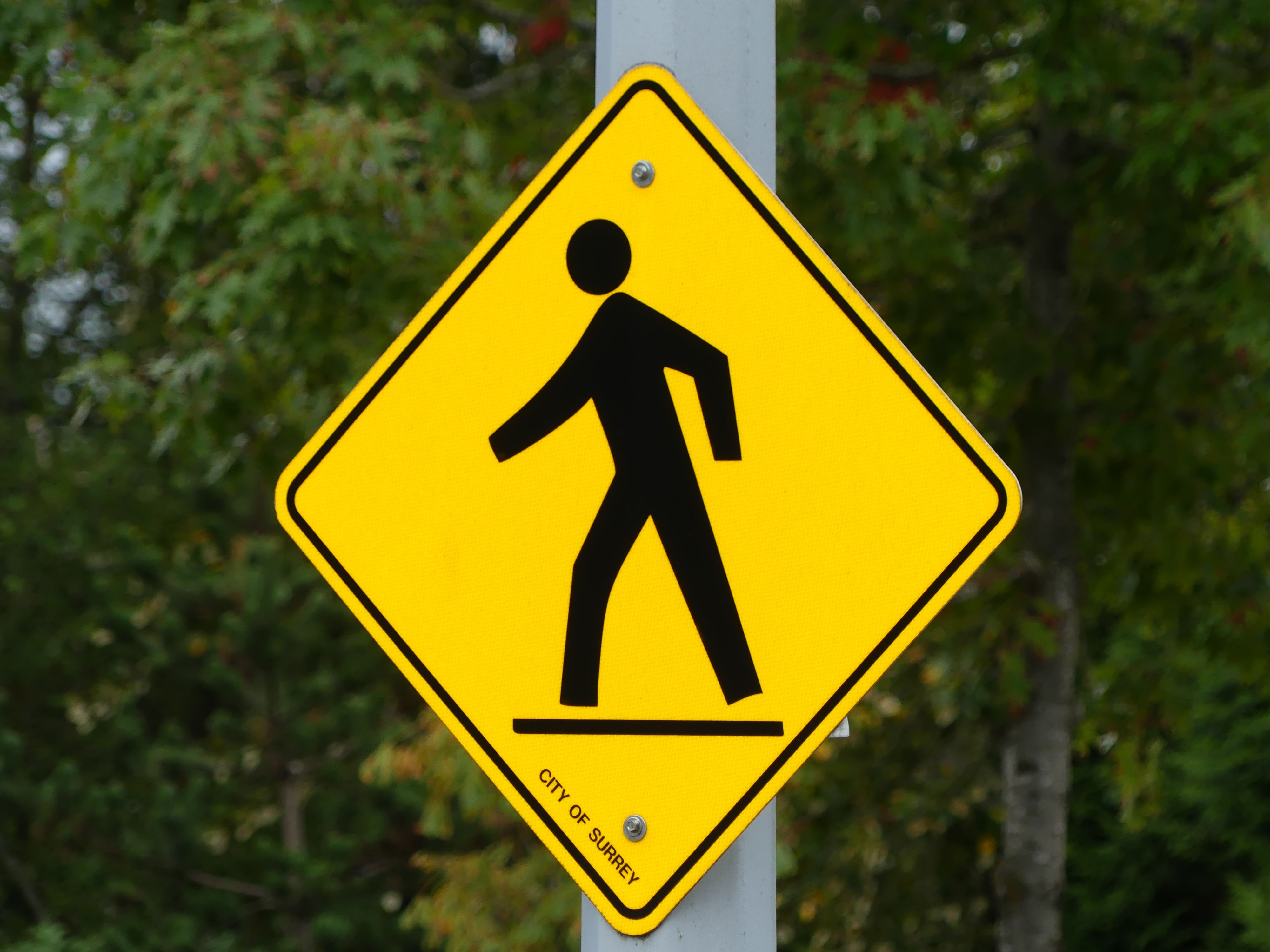
An automated traffic signal is also planned for the Little Miami Scenic Bike Trail crossing along West Loveland Avenue, replacing the existing pedestrian-activated flashing crosswalk.
Over the full decade, the OKI region recorded 6,117 pedestrian-involved crashes resulting in 259 deaths and 1,727 bicycle-involved crashes resulting in 29 deaths. Serious bicycle crashes have increased since 2020, and serious pedestrian crashes remain above pre-pandemic levels.